You should understand safety, legal requirements, and when to call a licensed electrician for your Papakura home: any rewiring, circuit faults, or meter and RCD issues must be assessed by a qualified tradesperson, not DIY. Be aware of visible signs like flickering lights, tripping breakers, burning smells, or discoloured sockets, and keep a record of compliance certificates and permits for upgrades. Regular testing, prompt repairs, and using experienced local electricians protect your home and family.
Key Takeaways:
- Use a registered/licensed electrician – verify registration with the Electrical Workers Registration Board and confirm public liability insurance.
- Ensure all work complies with New Zealand electrical regulations and standards; request a written Certificate of Compliance when the job is finished.
- Prioritise safety upgrades in older Papakura homes: assess switchboards, install RCD/earth-leakage protection, and check earthing.
- Obtain at least two written quotes with fixed-price breakdowns, timelines, and warranty details before hiring.
- In an electrical emergency switch off the main and call a 24/7 registered electrician; avoid DIY on mains-level work.
Importance of Electrical Repairs
Persistent issues like tripping breakers, flickering lights or warm sockets signal underlying faults that escalate if ignored; New Zealand homes operate at 230V/50Hz and RCDs typically trip at 30 mA within 30 ms to prevent shocks. Allowing small problems to continue often raises repair bills-simple switchboard replacements run $1,200-$3,500, while delayed fixes can increase costs by 50-200% as hidden damage spreads.
Safety Concerns
You face real risks from degraded wiring: a 230V fault can deliver lethal shocks and overloaded circuits (for example, a 10A circuit forced to carry 20A) will overheat insulation, often exceeding safe temperatures and igniting nearby material. Proper repairs and working RCDs reduce electrocution and fire risk; poorly done DIY work is a frequent cause of emergency callouts and voids many insurance policies.
Impact on Property Value
Unresolved electrical problems dent buyer confidence and trigger inspection contingencies, often leading to price reductions or repair demands; insurers may raise premiums or require upgrades before offering cover. Major jobs like full rewires typically range $5,000-$15,000 depending on house size, and visible electrical faults can cost you thousands in negotiated price adjustments at sale time.
When selling, you’ll often get repair quotes during building inspections-typical pre-sale quotes for a 3‑bed house fall between $5,000 and $12,000 for partial or full upgrades. Buyers commonly negotiate 5-10% off asking price if electrical work is needed, or ask you to carry out repairs first; factoring in potential insurer requirements for a modern switchboard ($1,200-$3,000) helps you set a realistic asking price and avoids last-minute sale collapses.
Common Electrical Issues in Homes
You’ll encounter a handful of recurring faults: overloaded circuits when multiple high-draw appliances run together, loose neutrals causing intermittent power and arcing, ageing wiring insulation, and nuisance trips of RCDs (typically 30 mA for personal protection). In Papakura you should note the 230 V, 50 Hz supply and breaker ratings commonly range from 10-32 A; this helps diagnose whether a problem is local to a fitting or systemic from the service connection. Prompt inspection prevents escalation.
Flickering Lights
If lights flicker when your kettle or heat pump starts, you’re likely seeing voltage drop from high inrush currents; if flicker affects the whole house it may point to a utility-side issue. Intermittent flicker limited to one fitting usually signals a loose lamp holder, switch or neutral connection and increases risk of arcing. Have an electrician measure voltage stability and tighten or replace suspect connections.
Outlets and Switch Problems
You’ll spot outlet and switch faults as warm sockets, scorch marks, buzzing, or intermittent power when plugs are moved; these indicate loose terminals, back-stabbed connections or degraded insulation. Typical wall outlet circuits are protected by 10-20 A breakers, so repeated tripping or heat under load requires immediate attention to avoid fire risk and appliance damage.
For deeper troubleshooting you can start by unplugging all loads and seeing if the issue persists, but avoid opening live panels. An electrician will perform insulation resistance and earth continuity tests, check terminal torque, and measure supply voltage and earth loop impedance. Upgrading old two-pin outlets to earthed three-pin, replacing back-stabbed outlets, and adding RCD protection are common remedial steps that restore safety and reliability.
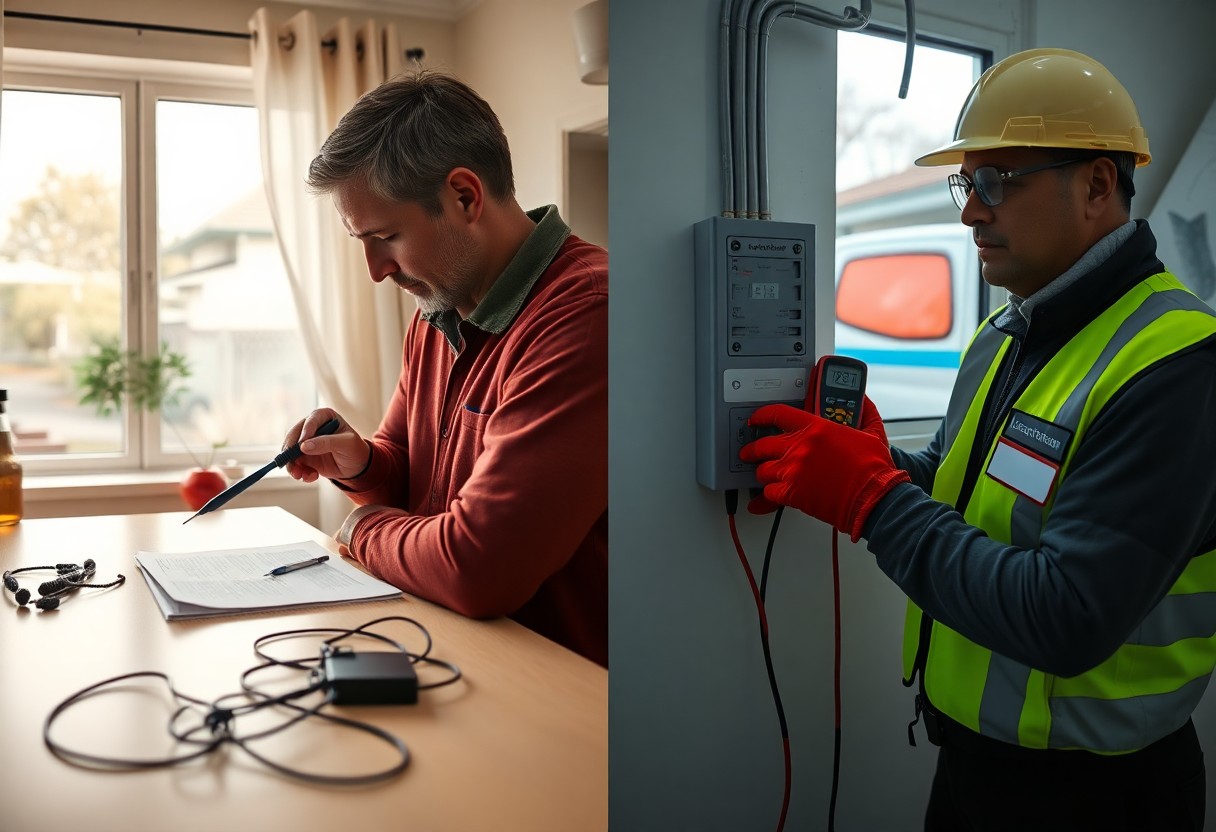
DIY vs. Professional Repairs
Risks of DIY Electrical Work
When you attempt household electrical repairs you risk electric shock from 240V mains and unseen faults; even a small mistake like reversing neutral and earth can make an appliance live. Faulty DIY joints often lead to arcing and thermal hotspots that start fires, with loose connections a common cause. In New Zealand, RCDs trip at 30 mA to protect people, but incorrect work can bypass or defeat these devices, and insurers may decline claims if uncertified work caused damage.
When to Call a Professional
Call a licensed electrician for anything beyond swapping a light bulb or replacing a plug: installing new circuits, replacing the consumer unit (switchboard), hooking up fixed appliances (cooker, hot water cylinder, EV charger), or after persistent breaker trips, burning smells, visible arcing, or water-damaged sockets. Also get a pro involved if your RCDs fail testing or you’re planning renovations, since these tasks often require compliance certificates and specialist testing that only registered electricians provide.
A qualified electrician will isolate circuits, use insulation resistance testers and clamp meters, check earth continuity and polarity, and perform thermal imaging to locate hot joints; they’ll issue a Statement of Compliance or electrical safety certificate when required. Expect same-day emergency response for hazardous faults, written test results, and clear repair recommendations-diagnostics commonly uncover hidden issues like damaged insulation or overloaded circuits that DIY checks miss.
Understanding Electrical Codes and Regulations
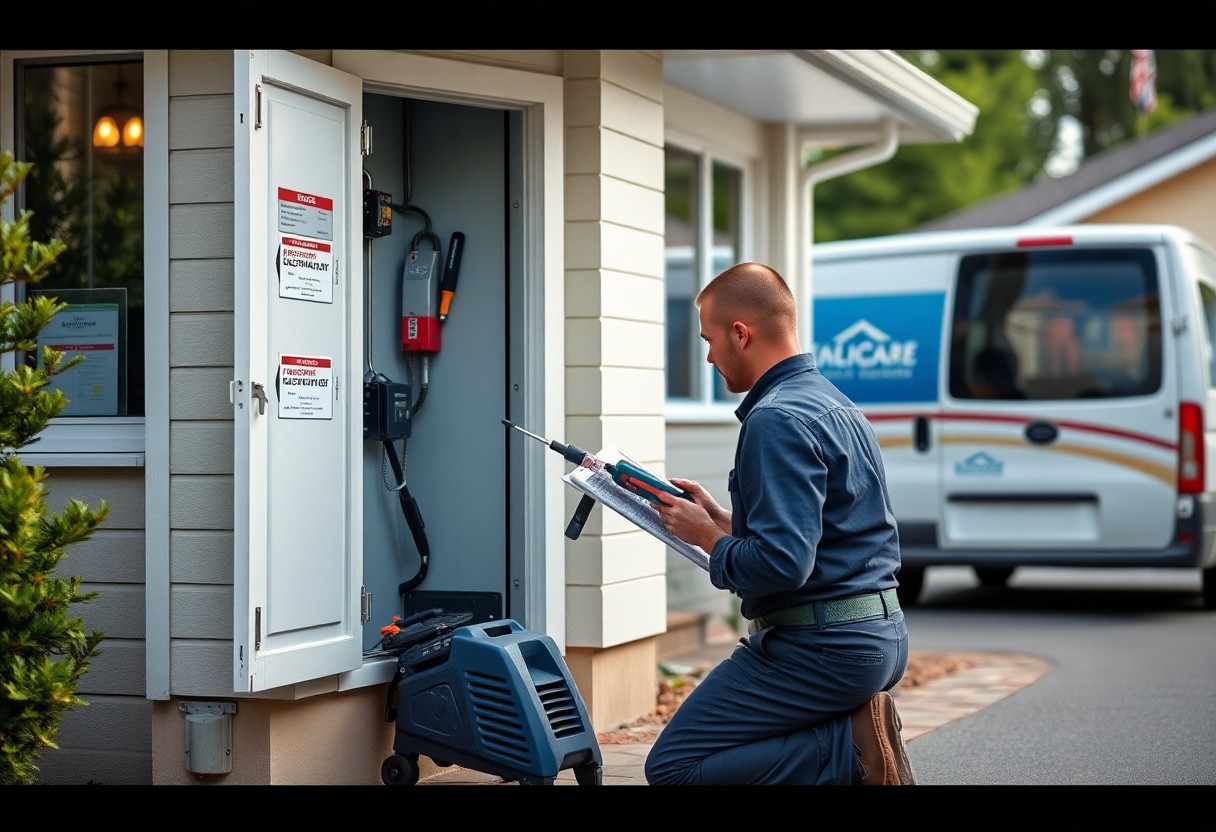
You must comply with national legislation such as the Electricity Act and the Electricity (Safety) Regulations plus the NZ Electrical Code of Practice; prescribed work-like new circuits, switchboard alterations or meter relocations-has to be carried out by a registered electrician and accompanied by a Certificate of Compliance (COC), and some larger jobs will also need a building consent from the council.
Local Regulations in Papakura
Auckland Council handles building consents in Papakura and the local distribution network (commonly Vector) must be notified for meter moves or supply upgrades; for example, installing an EV charger or replacing a consumer unit usually requires a COC and network approval, and you should expect consent or connection lead times of one to four weeks depending on scope.
Importance of Compliance
Compliance protects you: around one in ten house fires originate from electrical faults, and non-compliant work can void your insurance, lead to council enforcement or disconnection by the lines company; meeting standards reduces injury risk and avoids costly rework when you sell or refinance.
Practical steps to stay compliant include asking your electrician for the COC and test results, checking Auckland Council’s consent requirements for the specific job, notifying your lines company early if load changes are likely, and keeping all certificates and invoices-banks, insurers and buyers will often request this documentation during claims or property transactions.
Cost Considerations
Typical Repair Costs
Minor call-outs in Papakura typically start at NZ$80-$150, with simple socket or switch replacements often totalling NZ$100-$250 including parts; replacing a consumer unit commonly falls between NZ$800-$2,500, while partial rewiring or a multi-room job can range NZ$1,500-$6,000 depending on access and materials. You should get at least two quotes and confirm whether testing and certification are included in the price.
Factors Influencing Costs
Accessibility, wiring age, materials and timing all affect the bill: difficult ceiling or floor access can raise labour by 20-50%, legacy wiring like knob-and-tube or aluminium requires extra work, branded components cost more, and after-hours calls often add a 50-100% surcharge. You can expect compliance testing and certification fees of NZ$100-$400 on top of labour and parts.
- Access issues increase hours on site and therefore labour charges.
- Older wiring typically means more replacement rather than a simple repair.
- After-hours or emergency call-outs carry higher hourly rates and surcharges.
- This impacts the final quote and how you prioritise repairs.
When comparing quotes ask each electrician for a detailed scope: include line-item pricing for parts, labour hours, testing, and any council or certification fees; for example, an electrician quoting NZ$1,800 for partial rewiring should show NZ$1,200 labour, NZ$400 materials and NZ$200 for testing. You should also check warranties and whether RCDs or surge protection are included to avoid repeat costs.
- Permits and certification can add time and a separate fee to the job.
- Higher-spec materials like premium breakers or copper cabling increase upfront cost but lower failure risk.
- Longer warranties or maintenance plans may reflect higher initial pricing but reduce future expense.
- This helps you weigh immediate cost against long-term value.
Tips for Homeowners
You can reduce risk by keeping an up-to-date log of electrical work, testing smoke alarms monthly and residual-current devices (safety switches) quarterly, and limiting extension-lead use to temporary situations. Label each circuit and note high-demand appliances so you avoid overloaded circuits. After a major fault, switch off the affected breaker and contact a registered electrician rather than attempting DIY repairs.
- Label the consumer unit and mark circuits for ovens, hot water, and heating.
- Replace frayed cords and avoid daisy-chaining extension leads.
- Keep meter rooms and switchboards dry and free from storage.
- Log tests and repairs for at least five years for insurance and resale value.
Regular Maintenance Practices
You should test smoke alarms monthly and replace disposable batteries yearly or fit 10-year sealed units, inspect plugs and cords every six months, and schedule a full electrical safety inspection every five years or before renovations. Have safety switches and breakers tested during services so faults are identified early and your maintenance records remain up to date for insurers and future buyers.
Choosing the Right Electrician
You must verify registration with the Electrical Workers Registration Board (EWRB), confirm at least NZ$1 million public liability insurance, and request three written quotes with a clear scope and timeline. Check recent online reviews, ask for references from the last 12 months, and ensure the electrician will provide a Certificate of Compliance on completion of any new or altered circuits.
When comparing bids, require a written scope listing materials, labour hours, and who sources parts; prefer fixed-price quotes to avoid unexpected call-outs. Confirm experience with similar jobs-complex switchboard upgrades are best handled by someone with five-plus years’ relevant work-and insist on a written workmanship warranty (commonly 12 months) plus the compliance certificate; if a contractor will not provide these, choose another provider.
To wrap up
Summing up, you should treat electrical repairs in Papakura as professionally managed: hire a licensed electrician, ensure work meets New Zealand electrical standards and local permitting, get written quotes, keep records, and request test certificates. Watch for flickering lights, tripping RCDs, burning smells, or warm outlets and isolate circuits; prioritise safety by avoiding DIY fixes that risk injury or noncompliance.
FAQ
Q: What qualifications and checks should Papakura homeowners require from an electrician?
A: Hire a registered/licensed electrician who can show current registration and public liability insurance. Ask for proof of qualification, references or recent job photos, and a written quote. Confirm they will issue a Certificate of Compliance and provide test/results on completion. Check they work to NZ standards (for example AS/NZS 3000) and that any safety testing, RCD checks and earthing verification are included in the scope.
Q: How can I tell if my home wiring or switchboard needs upgrading?
A: Warning signs include frequent tripping or blown fuses, flickering or dimming lights, warm or discoloured outlets and persistent burning or ozone smells. Older switchboards with fuses, lack of residual-current devices (RCDs), limited circuit capacity or corroded connections indicate an upgrade is needed. A qualified electrician can perform an inspection, load assessment and advise on replacing the consumer unit, adding RCD/MCB protection, and fixing earthing or bonding issues.
Q: What safety steps should I take before, during and after electrical repairs?
A: Before work, secure access, clear the area, switch off and unplug affected appliances, and arrange for pets and children to be kept away. During work, allow only the licensed electrician to operate isolators or work on live components; they should follow safe isolation and testing procedures. After completion, obtain the Certificate of Compliance, ask for test records and a brief explanation of the work, and confirm any warranties or maintenance recommendations.
Q: How much do electrical repairs typically cost in Papakura and how should I get quotes?
A: Costs vary by job complexity, materials, access, and whether an emergency call-out is needed. Small repairs may be hourly; larger upgrades are usually fixed-price. Get at least two written quotes with itemised labour and materials, any permit or lines-company fees, and a clear warranty. Ask about potential hidden costs (e.g., access to roof cavities or replacing old wiring behind walls) and whether the quote includes certification and testing.
Q: Are there Papakura-specific or local requirements I should be aware of for electrical work?
A: Coordinate service-disconnection or meter work with the local lines company when service alterations are required, and check whether the local council requires building consent for associated structural or renovation work. If the property is a rental, ensure compliance with rental electrical-safety regulations and documentation obligations. A local, experienced electrician will be familiar with council processes, lines-company requirements and typical local wiring issues.