Many Karaka developments benefit when you engage professional electrical services because your projects gain compliant, inspected installations that improve safety and reduce liability; certified electricians optimise energy use, lower long‑term costs, integrate smart systems, and keep timelines on schedule. By relying on accredited professionals you secure warranties, efficient troubleshooting, and future‑proof designs that protect your investment and streamline handover to owners.
Key Takeaways:
- Ensure regulatory compliance and site safety through certified electricians and up-to-date inspections.
- Reduce long-term costs with efficient wiring, load management and energy-saving installations.
- Minimize schedule delays and rework by integrating electrical planning early in design and construction phases.
- Increase property value and marketability with high-quality, future-proof features like EV charging and smart controls.
- Lower operational risk and maintenance overhead via preventive testing, warranties and documented handovers.
Understanding Professional Electrical Services
You rely on professional electrical services to deliver compliant installations, planned maintenance, testing and emergency repairs that keep projects on schedule and safe; licensed teams typically cut rework and call-backs by ~25% and can lower energy use 10-20% through LED and control upgrades, so your budgets, timelines and tenant safety all improve when you engage qualified contractors familiar with local electrical codes and site coordination.
Types of Electrical Services Available
You can engage electricians for design-and-build wiring, metering and distribution, lighting retrofits, data/network cabling, testing and commissioning, and 24/7 emergency response-each service addresses distinct risk and cost drivers on a development site.
- Design & layout for new builds and subdivisions
- Power distribution, switchboards and sub-main installation
- Lighting systems, controls, and energy-efficiency retrofits
- Data, comms, and smart-building cabling
- Testing, commissioning, certification, and emergency repairs
Recognizing how service choices affect compliance, lifecycle costs and tenant experience lets you prioritize spend and contract scope.
| Design & layout | Reduces costly rework; aligns load calculations with future growth |
| Distribution & switchboards | Ensures safe capacity, simplifies maintenance and future expansions |
| Lighting & controls | Drives 10-20% energy savings with LEDs and sensors in common areas |
| Data & comms cabling | Supports tenant connectivity and IoT, lowering later retrofit costs |
| Testing & certification | Provides compliance evidence for council inspections and insurer requirements |
Importance of Certified Electricians
You need certified electricians because they carry the training, licensing and insurance that reduce safety incidents and liability; in practice a licensed team performs standardized tests, issues certificates of compliance, and meets regulatory inspection requirements so your project avoids stoppages and penalty risk.
You should note that certified tradespeople typically complete multi-year apprenticeships and ongoing CPD, which translates into faster fault diagnosis, fewer site defects, and predictable handover documentation; by contracting certified electricians you also strengthen your position with insurers and accelerate approvals during building inspections.

Benefits of Professional Electrical Services for Karaka Developments
Professional electrical services reduce defects, speed handovers, and protect your investment by combining qualified installation, documented testing and proactive maintenance. You gain predictable schedules, fewer call‑backs and clearer warranties; for example, disciplined commissioning and snagging can cut post‑handover electrical faults by up to 40%, improve tenant satisfaction and lower insurance risk, all while making future upgrades and metering simpler for phased residential or mixed‑use Karaka projects.
Ensuring Safety and Compliance
Certified electricians ensure your sites meet AS/NZS wiring rules and local Building Act requirements, complete mandatory testing (insulation, continuity, RCD operation) and issue compliance certificates so your handovers pass inspection. You get properly sized earthing, labelled switchboards and calibrated protective devices, which reduces shock and fire exposure and keeps your project aligned with council inspections and insurer conditions.
Enhancing Efficiency and Performance
Targeted electrical upgrades-LED lighting (typically 50-70% less lighting energy), timed controls and basic power factor correction-improve operating costs and load profiles so your building systems run cooler and last longer. You benefit from reduced bills, fewer peak‑demand charges and better tenant comfort through proper circuit zoning and intelligent controls.
For greater detail, you can combine an energy audit with a staged retrofit: start with LED and sensor lighting, add VFDs on large motors and install a building management interface to monitor consumption. In a comparable 40‑unit retrofit, this approach produced ~25% total energy savings and a 3-6 year payback; integrating PV or battery storage later can cut peak demand further and improve resilience, giving you measurable OPEX reductions and clearer lifecycle cost projections.
Cost Implications of Hiring Professional Services
You’ll pay higher upfront fees for licensed electricians, but that cost often offsets through lower lifecycle expenses: professionals cut rework and call-backs by up to 70%, improve energy performance with LED and smart control installs that can reduce consumption 15-35%, and ensure compliance to avoid delays during handover. For Karaka Developments, this means smoother certification, predictable budgets, and faster occupancy-factors that protect your margin more than the initial tender price suggests.
Initial Investment vs Long-Term Savings
You should view electrician quotes against lifecycle metrics: typical licensed hourly rates in New Zealand range NZ$70-$120, while a smart lighting and controls package can pay back in 3-5 years via 20-30% lower energy bills. Warranties and compliance also reduce your contingency spend; a 2-5 year workmanship warranty cuts maintenance line items and can lower insurance excesses, improving total cost of ownership beyond the first-year invoice.
Avoiding Costly Mistakes
You avoid expensive fixes and safety liabilities by engaging professionals early: common DIY or unlicensed errors lead to rework that typically adds 15-30% to project cost, failed inspections that delay handover, and potential insurance refusal for non-compliant work. Hiring a qualified team mitigates these risks and protects both construction timelines and end-user safety.
You’ll want to prevent specific failures that drive big expenses-undersized conductors causing voltage drop and appliance damage, incorrect earthing or RCD wiring that defeats life-safety protection, and overloaded switchboards requiring full replacement. Remediation can range from a few hundred dollars for local fixes to several thousand for partial rewires or switchboard upgrades. By having professionals perform proper load calculations, phasing and board design up front, you reduce the chance of costly retrofits and keep your snag list and contingency spend to a minimum.
Choosing the Right Electrical Service Provider
When engaging electrical services for Karaka Developments, you should demand providers who combine regulatory compliance with delivery speed-ask for AS/NZS 3000 compliance, evidence of licensed electricians, and clear warranty terms (commonly 1-5 years). Prioritise firms that offer prefabricated solutions to cut on-site time; for example, prefabricated switchboards have been shown to reduce installation hours by roughly 15-25% on multi‑unit projects.
Key Qualities to Look For
You want a provider with 5+ years’ experience on similar residential or mixed‑use developments, full public liability and professional indemnity insurance, and an in‑house project manager. Seek ISO 9001 or equivalent quality systems, documented test-and-tag procedures, BIM/CAD coordination capability, and 24/7 emergency support so your program, safety, and handover documentation stay on track.
Evaluating Credentials and Experience
Verify licensing and registrations with your local electrical authority, request a project portfolio showing at least three comparable jobs, and ask for two client references you can contact. Check proof of insurance limits (typically $5M+ for commercial work), confirm on-site supervisor ratios (commonly one supervisor per 8-12 tradespeople), and review sample commissioning reports to assess technical rigor.
Go deeper by requesting a sample Inspection and Test Plan (ITP), a typical commissioning schedule, and copies of recent compliance certificates for completed projects; these documents reveal testing frequency, fault-tracking methods, and acceptance criteria. Ask how subcontractors are pre‑qualified, review their plant and PPE registers during a site visit, and request safety metrics such as Lost Time Injury Frequency Rate (LTIFR) and near‑miss logs. Finally, validate references by asking former clients about adherence to budgets, variation control (number and cost of change orders), and post‑handover support response times-concrete figures here help you compare bidders objectively.
Case Studies: Successful Applications in Karaka Developments
You can see how targeted electrical strategies delivered measurable outcomes across developments: reductions in energy consumption, lower peak charges, improved reliability and faster compliance sign‑offs. These examples highlight specific savings, equipment choices and project metrics you can replicate on your sites.
- Residential subdivision – 48 lots: centralized 120 kW PV + smart meters cut average household consumption by 28% (~1,900 kWh/yr), reduced annual network charges by NZ$65,000 and dropped outage incidents from 6 to 1 per year.
- Mixed‑use commercial – 12,000 m² retail/office: LED retrofit of 5,800 fixtures reduced lighting load 62% and total site energy 38%, saving ~NZ$120,000/yr with a 2.1‑year simple payback.
- High‑density apartments – 96 units: 200 kWh battery + load management achieved 120 kW peak shaving, avoided a projected NZ$350,000 network upgrade and provided 72‑hour backup for critical services.
- Public realm & EV – 200 streetlights converted to networked LED: energy down 65%, maintenance costs down 70%; installed 10 slow and 6 fast chargers, supporting a projected 8% EV uptake within 3 years.
- Community facilities & schools – 150 kW solar + smart controls: daytime self‑supply reached 85%, exported ~45,000 kWh/yr, grant funding covered 40% of capex and payback occurred in ~4.5 years.
Residential Projects
You’ll find that professional electrical design for homes in Karaka-proper load sizing, voltage‑drop limits under 3% and coordinated smart meter/solar layouts-lowers first costs and the entire lifecycle spend. For example, a 48‑lot estate achieved a 28% average energy reduction and reduced snagging on handover by over 90% through staged commissioning and compliance testing.
Commercial Projects
You should expect measurable operational improvements when commercial buildings get specialist electrical attention: the 12,000 m² retrofit cut site energy 38%, reduced peak demand and freed up capacity for tenant fitouts, delivering NZ$120,000/yr in direct savings and improved tenant satisfaction scores.
Digging deeper, you’ll see the commercial wins come from combined measures: LED conversions (62% lighting cut), power factor correction, sub‑metering per tenancy, and demand response systems. Implementing these together reduced maintenance spend by ~30%, shortened tenant fitout timelines by coordinating distribution risers, and produced IRRs above 18% on retrofit packages-data you can use to justify investment to stakeholders.
Future Trends in Electrical Services for Developers
Smart Technology Integration
IoT-enabled building management systems let you coordinate lighting, HVAC and EV charging to reduce energy use by 10-25%; specify BACnet or Modbus for interoperability and 5G or fiber for telemetry. Use predictive maintenance-current monitoring and thermal imaging-to cut fault rates 30-50% and shorten downtime. For example, a 100-unit mixed-use rollout that added occupancy sensors, daylight harvesting and staged EV charging lowered peak-demand charges by about 18% within 12 months.
Sustainable Energy Solutions
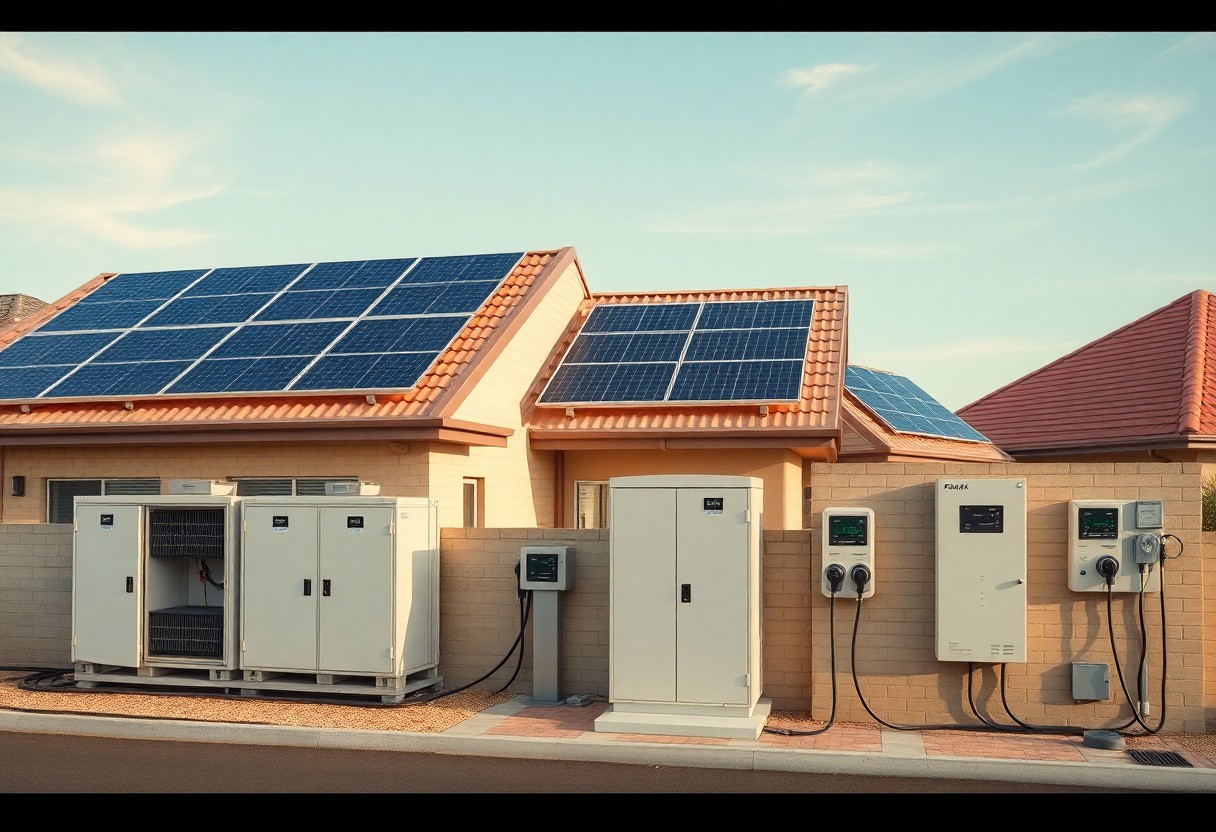
Pair rooftop solar, battery storage and high-efficiency heat pumps so you can slash grid imports: typical designs use 3-6 kW PV per dwelling and 10-20 kWh batteries, with paybacks often in 5-10 years depending on tariffs. A 30-home project with 150 kW PV and 300 kWh storage cut imported energy roughly 45%, while on-site generation also supports resilience and lower operating costs.
When scaling solutions, design batteries for 80-90% depth-of-discharge and round-trip efficiency >85%, and consider DC-coupled systems where you need higher solar-to-storage efficiency. Specify three-phase inverters for multi-unit sites, allow conduit and metering capacity for future expansion (plan for 7-22 kW EV chargers per bay), and enable VPP or demand-response participation to monetize flexibility while meeting local grid export limits (commonly 3-5 kW per residence).
Conclusion
Drawing together the advantages, you ensure Karaka Developments gains compliance, enhanced safety, reliable systems and energy efficiency by hiring professional electrical services. Your projects will meet regulations, stay on schedule, and avoid costly rework while benefiting from expert design, testing and ongoing maintenance. This professional approach protects occupants, preserves asset value and positions your developments competitively in the market.
FAQ
Q: What specific electrical services can Karaka Developments expect from professional contractors?
A: Professional contractors provide full-scope services including electrical design, load calculations, switchboard and distribution installations, structured cabling and data networks, lighting design and installation, photovoltaic and battery system integration, testing and commissioning, compliance certification, and ongoing maintenance and emergency repairs.
Q: How do professional electrical services improve safety and regulatory compliance on development sites?
A: Licensed electricians apply industry-standard safety protocols, conduct risk assessments, install protective devices (RCDs, circuit breakers, earthing), perform insulation and continuity testing, and supply the documentation required for compliance with local building codes and inspection authorities, reducing the likelihood of electrical hazards and permit delays.
Q: In what ways can professional electrical input reduce long-term costs for Karaka Developments?
A: Proper design and installation reduce rework, defects, and warranty claims. Energy-efficient systems and smart controls lower operational energy bills. Preventive maintenance programs extend equipment life and avoid costly downtime. Clear documentation and warranties from professionals also lower lifecycle management costs.
Q: How can electricians help Karaka Developments meet sustainability and energy-efficiency targets?
A: Electricians can specify and install LED lighting, advanced controls and occupancy sensors, high-efficiency switchgear, building energy management systems, and renewable generation with battery storage. They can perform energy audits and implement load-management strategies to optimize consumption and support certifications like Green Star or NABERS.
Q: What impact do professional electrical services have on project timelines and coordination with other trades?
A: Early engagement of electrical professionals during design stage enables accurate scheduling, clash-free coordination with structural, HVAC, and plumbing trades, prefabrication of wiring and panels to speed site work, timely inspections and sign-offs, and a single point of responsibility for electrical scope, which shortens delivery timelines and reduces delays.